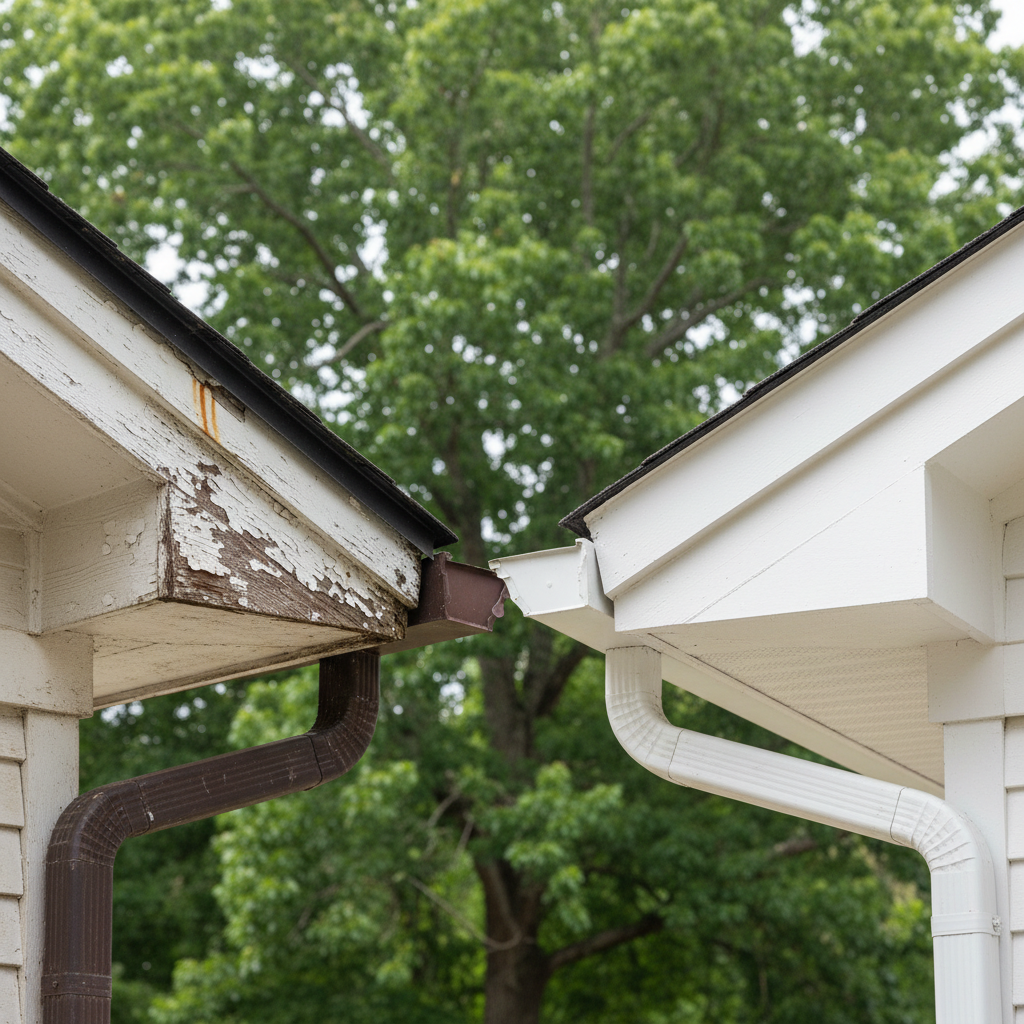
Alright, let's talk about soffits. You've probably noticed some damage up there – maybe a soft spot, a hole, or some paint peeling away. Your first thought is likely, "Can I just patch this?" or "Do I need to rip it all out?" That's a common question, and honestly, there isn't always a simple, one-size-fits-all answer. But for homeowners right here in Chapel Hill, especially with our humid summers and those sudden, heavy downpours, making the right call on soffit repair is pretty darn important.
Patching Soffit Damage: The Quick Fix
When we talk about patching, we're usually looking at smaller, localized problems. Think a little hole from a bird or squirrel, a bit of rot on just one section, or some minor water damage that hasn't spread too far. This approach means cutting out the damaged bit and replacing only that piece. If it's wood, we'll cut a new piece, prime it, paint it, and fit it in. If it's vinyl, we simply replace a panel or two.
The Good Side of Patching:
- Cost: This is usually the cheapest option upfront. You're buying less material and spending less on labor. If the damage really is minor and isolated, it can save you a good chunk of change.
- Speed: A patch job typically gets done quicker. We can often be in and out in a day, sometimes even just a few hours, depending on how much needs doing.
- Less Disruptive: We're not tearing apart a huge section of your home's exterior, so it's less messy and less of an intrusion.
The Downside of Patching:
- Durability: This is where patching can fall short. If we don't fix the underlying cause of the damage, that patch might not last. For example, if you've got a recurring leak from your gutters that's causing rot, a patch won't solve the leak. You'll be patching again before you know it.
- Appearance: Even with a good paint match, a patched section can sometimes stick out, especially on older homes where the original material has faded. It might not look quite right.
- Hidden Issues: What looks like a small spot on the surface can sometimes be a sign of much bigger problems behind the soffit. We've seen plenty of cases where a small patch job reveals widespread rot or a pest infestation once we get in there.
- Maintenance: You might end up doing more frequent maintenance if you're just chasing down small issues with patches.
Full Soffit Replacement: The Long-Term Solution
This is when we're talking about taking down larger sections, or even all, of your soffits and putting up new material. This is often the best approach when the damage is extensive, widespread, or points to a systemic problem.
The Good Side of Replacement:
- Durability: You're starting fresh with new materials. If we also fix the root cause (like repairing your gutters or making sure your attic has good ventilation), you're setting yourself up for years, maybe even decades, of problem-free soffits.
- Appearance: A full replacement gives your home a uniform, fresh look. No mismatched patches, no faded sections. It can really boost your home's curb appeal.
- Opportunity for Upgrades: This is your chance to switch to more durable, lower-maintenance materials like vinyl or aluminum soffits if you currently have wood. It's also a great time to improve attic ventilation, which is super important for preventing moisture buildup in our climate.
- Confidence: You know the job's done right, and you won't be worrying about another soft spot popping up next month.
The Downside of Replacement:
- Cost: There's no getting around it, a full replacement costs more upfront than a patch. More materials, more labor.
- Time & Disruption: It takes longer, and there's more disruption to your property.
- Potential for Scope Creep: While we aim for accurate estimates, sometimes a full tear-off reveals even more extensive damage to fascia boards or rafter tails that wasn't visible before. We'll always tell you right away, but it's a possibility.
What I Recommend for Chapel Hill Homes
Here's the deal: for most Chapel Hill homes, especially those with older, wood soffits, I lean towards replacement when the damage is anything more than truly superficial. Why? Our local conditions. We get a lot of humidity, and those pop-up summer thunderstorms can dump a ton of water in a short amount of time. If your gutters aren't perfectly maintained (and whose are, really?), that moisture finds its way into your soffits and fascia.
We see a lot of homes in neighborhoods like Meadowmont or Southern Village where the original wood soffits, after 15-20 years, are just starting to show their age. A small patch might seem like a good idea, but often, the wood around it is already compromised, even if it doesn't look it. You're just putting a band-aid on a bigger problem.
If you've got a tiny, isolated hole from a woodpecker and the surrounding wood is solid, sure, a patch can work. But if you're seeing multiple spots of rot, widespread peeling paint, or any signs of animal entry, it's time to consider a more comprehensive solution. Replacing with vinyl or aluminum soffits means you're getting a material that won't rot, won't need painting, and is much more resistant to pests and moisture. It's an investment that pays off in reduced maintenance and long-term protection for your home.
Ultimately, the best way to figure out what's right for your home is to have someone take a look. We'll give you an honest assessment of what we're seeing, what your options are, and what we think makes the most sense for your budget and the long-term health of your home. Give Chapel Hill Gutter Solutions a call, and we'll come out and take a look at your soffits.