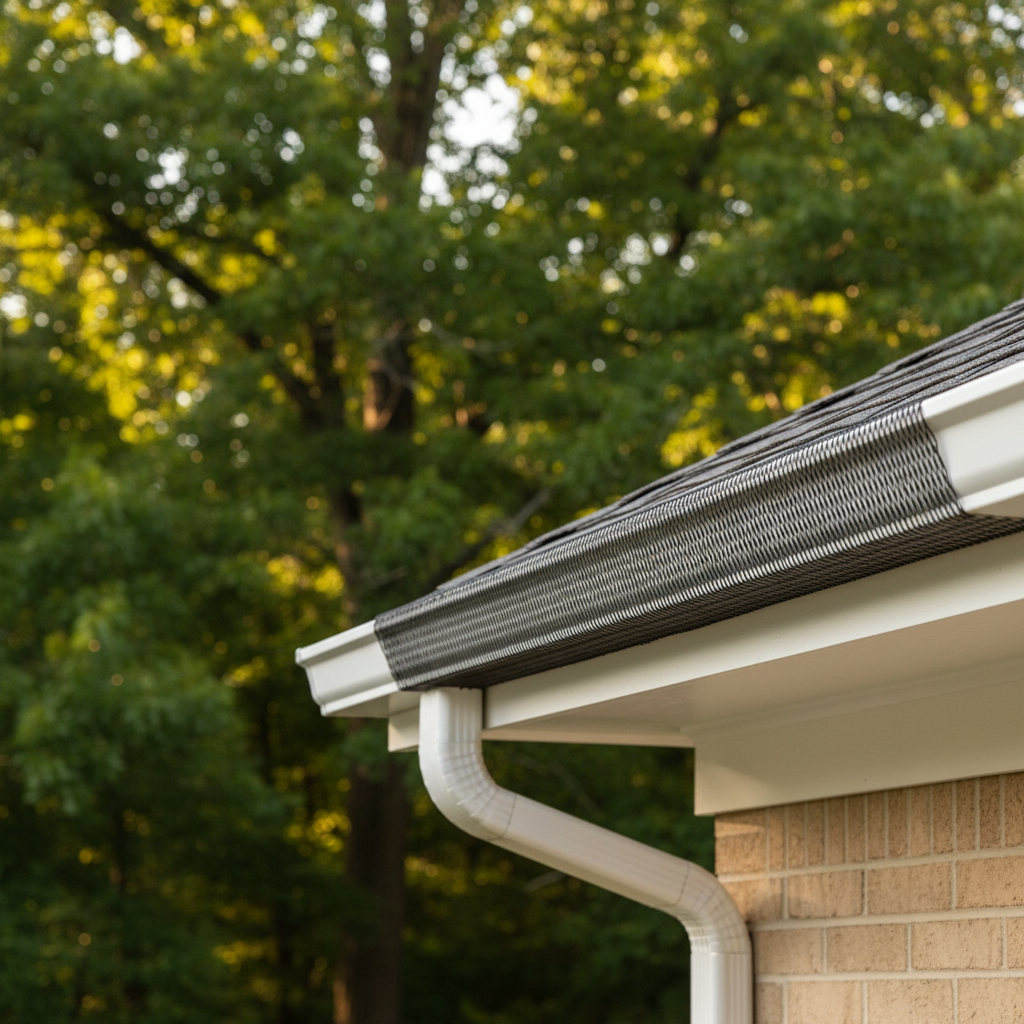
Homeowners in Chapel Hill spend a lot of time dealing with soggy oak leaves every autumn. If you live around Franklin Street or out past Meadowmont, you already know how aggressive our local tree canopy can be on a house. Installing Gutter Guards feels like a good weekend project to get your Saturdays back. But before you buy a cart full of plastic screens from the local hardware store, Chapel Hill Gutter Solutions wants to talk about what actually works in our local climate, what you can handle yourself, and when it is smarter to hand the job over to a professional.
Before You Buy: Assessing Your Roof and Trees
Drop-in plastic mesh screens look cheap and easy, but they tend to fail right when you need them most. Our heavy spring thunderstorms dump inches of water in an hour, and flimsy screens just overflow because the water cannot drop through fast enough. Take a walk around your yard during a heavy downpour if you can safely do so. Look at which trees are dropping debris. If you have massive pines shedding needles that weave themselves into a dense mat, standard screens will turn into a green carpet of moss by next spring.
You also need to check your current gutter pitch and fascia condition. If your gutters are sagging or pulling away from the rafter tails, putting Gutter Guards on them is a waste of money. You have to fix the foundation and the mounting first.
The DIY Route: What You Can Realistically Tackle
If you are comfortable on a tall extension ladder and have a free Saturday, installing snap-in or hinge-style surface tension guards on a single-story ranch home is totally doable. You will need a good pair of tin snips, work gloves, safety glasses, and a bucket for the muck. Clean those gutters out completely first. If you trap debris under a guard, you are just building a hidden compost bin right above your siding.
The catch with DIY is safety and height. Two-story homes in neighborhoods like Southern Village or near the Chapel Hill country club introduce serious ladder risks. If your roofline has steep pitches or awkward corners where valleys dump tons of water into a single spot, standard DIY Gutter Guards will overflow and dump water straight down onto your foundation.
When to Call a Professional
There comes a point where DIY stops saving you money and starts becoming a safety hazard. If your home has a complex roofline, a steep pitch, or stands two or three stories high, leave it to the crew. Chapel Hill Gutter Solutions brings specialized ladder stand-offs, safety harnesses, and heavy-gauge aluminum or stainless steel micro-mesh Gutter Guards that you cannot buy off the retail shelf.
We also look at things the average homeowner misses, like making sure the guards fit tightly under your drip edge so water does not overshoot the gutter entirely. A proper professional installation takes into account the specific volume of runoff your roof generates during those sudden North Carolina summer storms.
After Installation: Maintenance Reality Check
No gutter guard is truly maintenance-free. Anyone who tells you otherwise is trying to make a quick sale. Even with the best micro-mesh systems installed, fine silt from pine pollen and roof grit will eventually settle on top. Once or twice a year, you will need to take a leaf blower or a soft brush and sweep off the surface. The difference is that instead of scraping rotting sludge out of your troughs every month, you are just doing a quick ten-minute sweep from a secure spot. Keep an eye on your downspouts too, making sure Chapel Hill's famous clay soil and heavy runoff are not pooling near your foundation once everything is flowing smoothly.