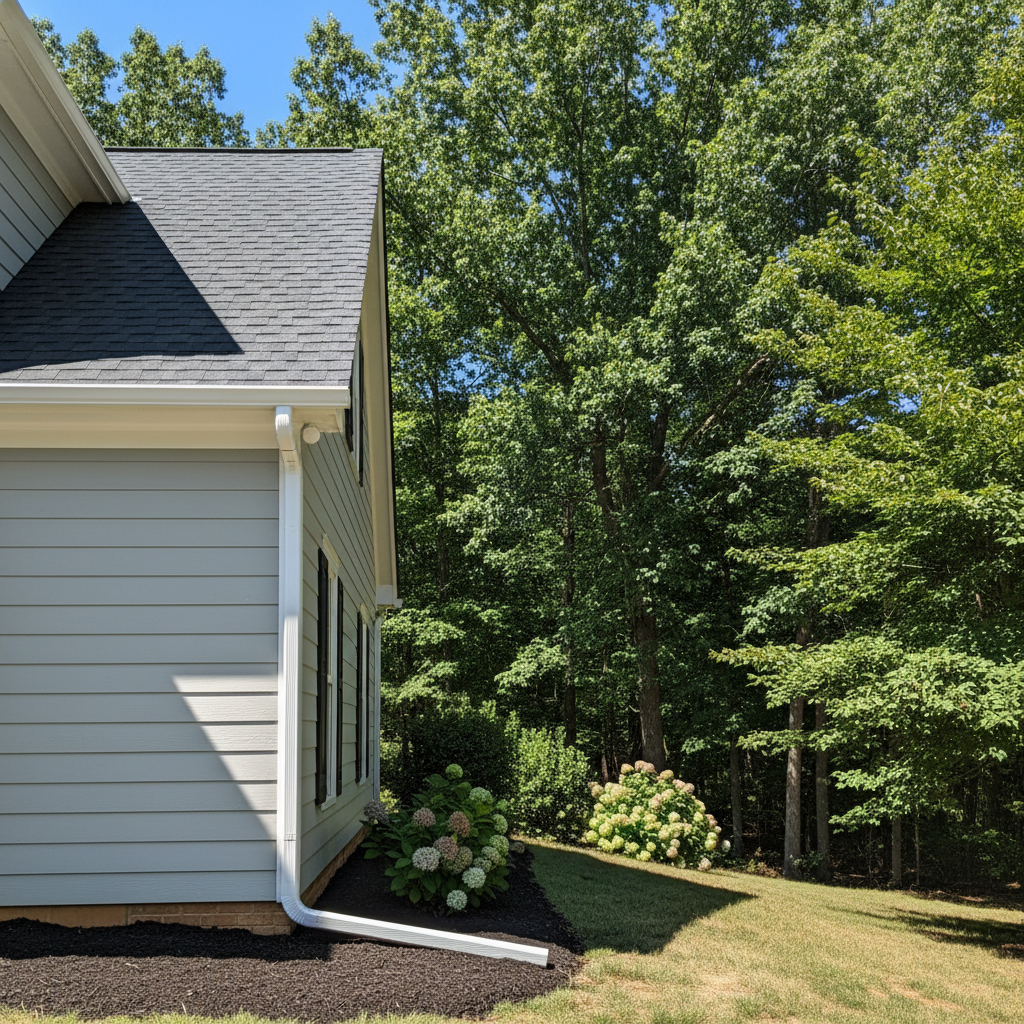
Ever notice water pooling right against your foundation after a heavy summer downpour here in Chapel Hill? That is usually not a roof problem. More often than not, it is a sign your downspouts are not doing their job.
Our local red clay does not absorb water quickly. When a big storm rolls off the Piedmont, water hits the ground fast. If your downspout dumps that water two inches from your siding, it pools up, puts hydrostatic pressure on your foundation walls, and eventually finds a way into your crawlspace. Chapel Hill Gutter Solutions sees this all the time in older neighborhoods like Meadowmont and down around Franklin Street where the landscaping has settled over decades.
When to Schedule Downspout Work
Timing matters a lot around here. You do not want to wait until the middle of a torrential spring thunderstorm to realize your extensions are disconnected. Chapel Hill Gutter Solutions always tells homeowners to look at their drainage twice a year. Late autumn, right after the leaves drop and clog everything up, is a prime window. Early spring before the heavy April showers start is the other sweet spot.
Winter can also throw a wrench into things. While we do not get massive blizzards, those overnight freezes followed by daytime thaws can crack PVC extensions or warp cheap aluminum elbows if water gets trapped inside and turns to ice.
Weather Conditions That Affect the Job
People ask Chapel Hill Gutter Solutions all the time if we can work on drainage systems during a rainy week. The short answer is yes, but it makes things messy. Working with Chapel Hill clay when it is soaked through is like digging in a swamp. We prefer dry spells to properly anchor splash blocks, bury corrugated extension pipes, or tie into underground pop-up drainage emitters.
High heat in July and August will not stop a repair, but nobody wants to be soldering or sealing joints on a roofline when it is ninety-five degrees with eighty percent humidity. Scheduling exterior property maintenance around our fickle seasonal shifts keeps the work quality high and the headache level low.
Protecting Your Investment Year-Round
Fixing a broken downspout is not just about slapping a new piece of aluminum on the side of the house. You have to think about where that water is ultimately going. Here are a few ways we help homeowners safeguard their properties:
- Extend downspouts at least six feet away from the foundation wall using solid pipe or low-profile roll-out drains.
- Check your underground discharge lines every few months to make sure tree roots or pine straw have not blocked the exit points.
- Keep an eye out for eroding mulch beds right beneath your roofline where the water runoff slams down too hard.
For homes and businesses in Chapel Hill, Chapel Hill Gutter Solutions provides Gutter Service work. Getting your downspouts routed correctly saves you thousands in structural foundation repairs down the road. If you hear water gurgling near your basement wall or see a puddle that will not go away, call Chapel Hill Gutter Solutions for Gutter Service work in Chapel Hill, North Carolina. We will sort it out before the next big storm hits.